Stump Grinding on the North Shore
A stump left after a removal can be a tripping hazard, get in the way of mowing and landscaping, and attract insects as it rots. We connect you with independent local professionals who grind stumps below grade so you can plant or seed over the spot.
Why tree problems matter
Most trees are an asset, and no tree is completely risk-free. A few warning signs, though, are worth having a qualified arborist look at before the next storm.
Storms bring down weak trees and limbs
Strong winds and soaking rain soften soil and can overturn trees, and ice storms create hazards of their own. When a mature tree or a large part of it fails, it can damage homes, cars, fences, and utility lines.(ISA TreesAreGood: Recognizing Tree Risk)
Dead and hanging limbs are a common hazard
Large dead branches, detached or hanging limbs, cracks or splits in the trunk, cavities, rot, and mushrooms at the base are signs of possible defects. Evaluating how serious they are is best done by a professional arborist.(ISA TreesAreGood: Recognizing Tree Risk)
Emerald ash borer is killing ash trees here
This invasive beetle is devastating ash trees in Massachusetts and has been confirmed in Essex and Middlesex counties. Its larvae feed under the bark and can kill a tree, and the USDA Forest Service notes that removing declining ash is an ongoing public safety risk and cost for communities and landowners.(Mass.gov: Emerald Ash Borer in Massachusetts, USDA APHIS: Emerald Ash Borer, USDA Forest Service: Massachusetts Forest Health Highlights 2025)
Storm cleanup is dangerous work
Trees and limbs under tension can move unexpectedly when cut, and damaged trees may be touching power lines. Stay away from downed lines, call the utility, and leave climbing and chainsaw work to trained crews.(ISA TreesAreGood: Storm-Related Tree Damage, ISA TreesAreGood: Recognizing Tree Risk)
Signs you may need help
- A stump left behind after a tree removal
- Sprouts coming up from an old stump or roots
- A stump in the way of a new lawn, patio, or fence
- Surface roots that keep getting hit by the mower
What the work typically involves
- Check the area. The pro checks access for the grinder and looks for irrigation, fences, and buried lines. Call 811 (Dig Safe) before digging.
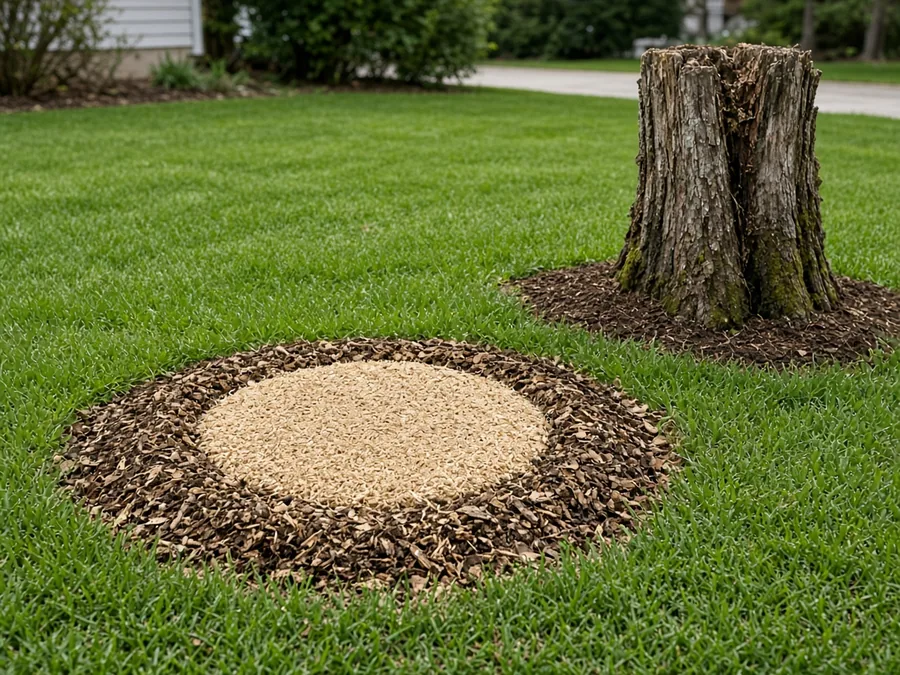
- Grind. A grinder chips the stump down below the surface. Ask how deep they grind and whether surface roots are included.
- Clean up. The grindings can be left to fill the hole, used as mulch, or hauled away for a fee.
- Restore. Topsoil and seed can go over the spot once the grindings are removed or settled.
Every job is different. The pro you speak with will explain their own approach and pricing. Storm Tree North Shore does not perform, supervise, or guarantee any work.
Further reading: M.G.L. c.87 §3: public shade trees and the tree warden · M.G.L. c.40 §15C: scenic roads · Mass.gov: Emerald ash borer in Massachusetts · Mass.gov: Municipally owned electric companies
Frequently asked questions
Is stump grinding the same as stump removal?
Not quite. Grinding chips the stump below grade and leaves the roots to decay. Full removal digs out the root ball and is more disruptive. Grinding is usually enough for lawns and gardens.
What does stump grinding cost?
It depends on the stump's diameter, the number of stumps, access, and cleanup. Get a written quote. We do not set or guarantee prices.
Can I plant a new tree in the same spot?
It is usually better to plant a little away from the old stump, where the soil is not full of decaying wood chips and roots.
How do I know if a tree on my property is dangerous?
The International Society of Arboriculture suggests looking for large dead branches, hanging or detached limbs, cracks or splits in the trunk or branch unions, cavities or rotten wood, mushrooms at the base, and recent root disturbance from construction. If you see any of these, have the tree evaluated by a qualified arborist.
Is emerald ash borer in my area?
Very likely. Mass.gov reports emerald ash borer has been detected in Essex and Middlesex counties, among others, and the whole state is part of the federal quarantine zone. If you have ash trees, an arborist can help you decide whether treatment or removal makes sense.
Should I cut up a storm-damaged tree myself?
It is safer not to. Limbs under tension can spring back when cut, and damaged trees can be in contact with power lines. Never go near downed lines, call your utility, and have trained tree workers handle the cleanup.